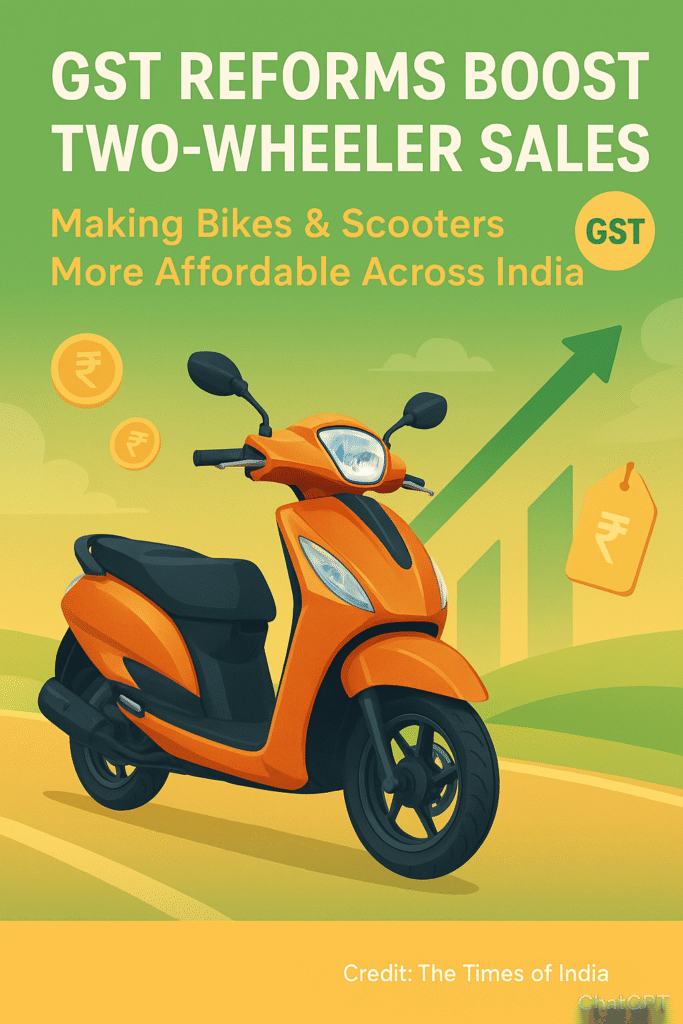
The recent Goods and Services Tax (GST) reforms are providing a strong push to the Indian automobile sector, especially in the two-wheeler segment. According to Crisil Ratings, two-wheeler sales are expected to grow by 5-6% in the current fiscal year.
How GST Reforms Are Driving Growth Affordable Pricing: Tax rationalization measures by the GST Council have made two-wheelers more cost-effective.
Higher Consumer Demand: Lower prices encourage more buyers to choose bikes and scooters over costlier options.
Contrast with Passenger Vehicles: Passenger vehicle (PV) sales are expected to grow only 2-3%, reflecting higher price sensitivity in this segment.
Why Two-Wheelers Are Leading the Market Two-wheelers remain economical, fuel-efficient, and easy to maintain, making them a preferred choice for Indian consumers.
The GST reforms have amplified this preference by reducing the overall purchase cost, particularly benefiting budget-conscious buyers.
Positive Impact on the Auto Industry Stimulating Demand: With the festive season approaching, automakers expect a further surge in sales.
Shift Toward Affordable Mobility: Consumers are increasingly favoring cost-effective options amid rising fuel and living costs.
Growth Driver: The two-wheeler segment continues to be a key contributor to overall automotive market growth.
The GST-driven reforms are a game-changer for India’s two-wheeler market. By making bikes and scooters more affordable, these measures are stimulating demand, encouraging economic mobility, and positively impacting the auto industry.—
Credit: The Times of India